Hiding Garters
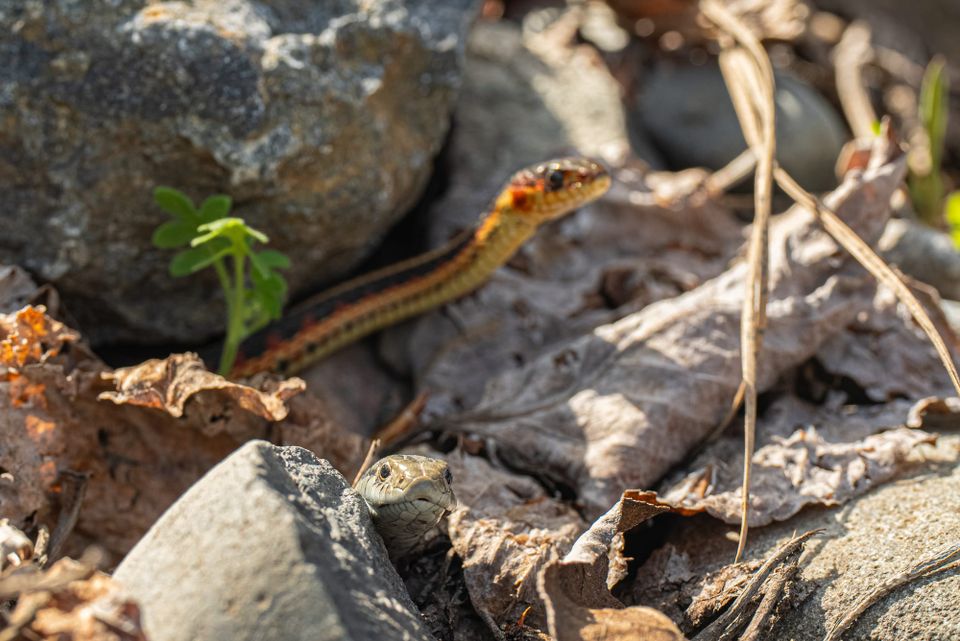
Being the most abundant and widespread group of snakes in North and Central America comes at a cost—everyone eats you, and you want to avoid being eaten.
Growing up chasing frogs, mucking around marshes, and playing in meadows, I saw garter snakes so often that they were one of the definitive animals of my childhood.
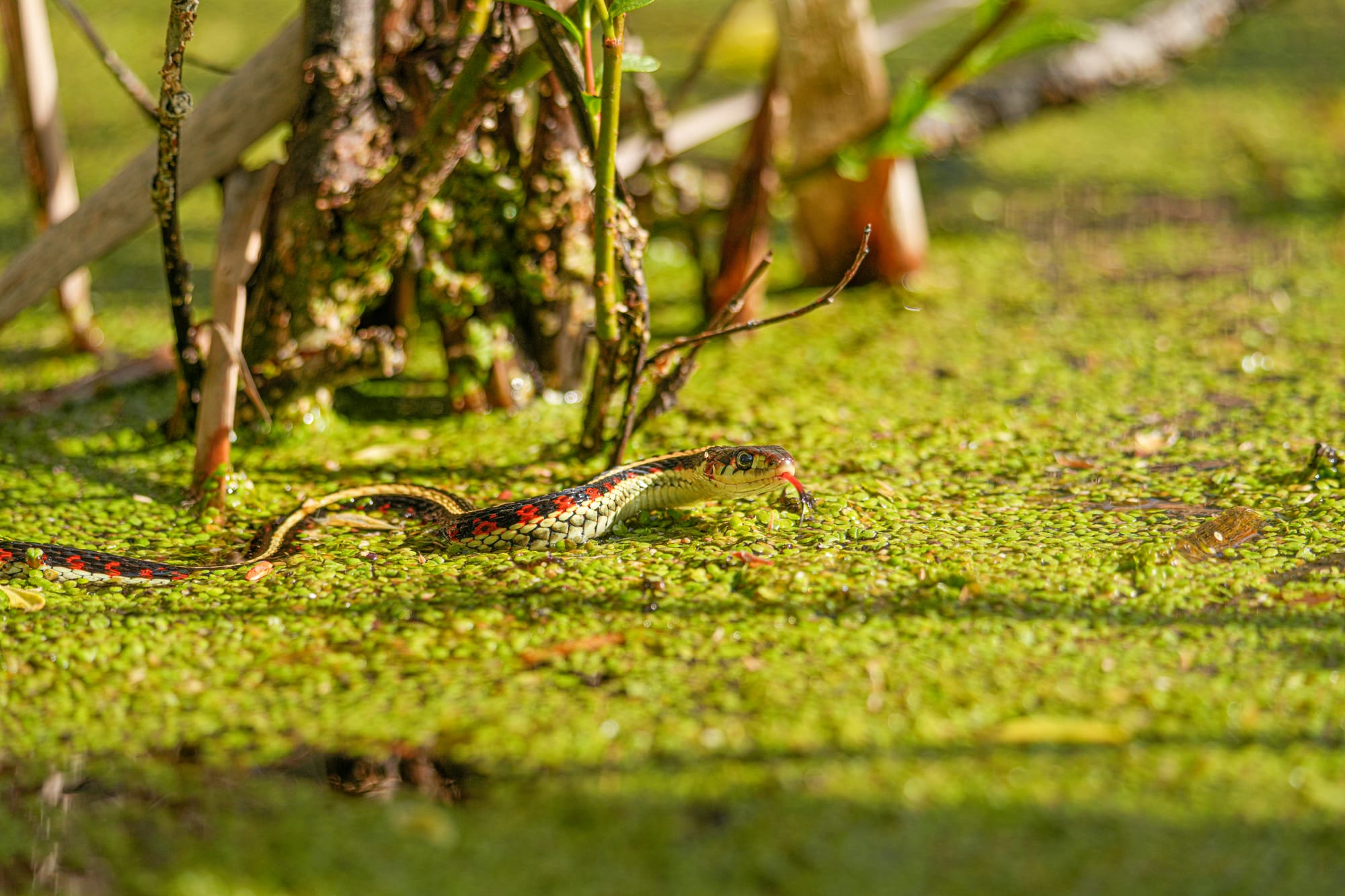
If you had a similar experience growing up, it might be because garter snakes are easily the most diverse and successful group of snakes in North America. Occurring from central Canada to Costa Rica, the 37 species (and 52 subspecies!) of garter snakes are highly adaptable and occupy an incredible range of habitats.
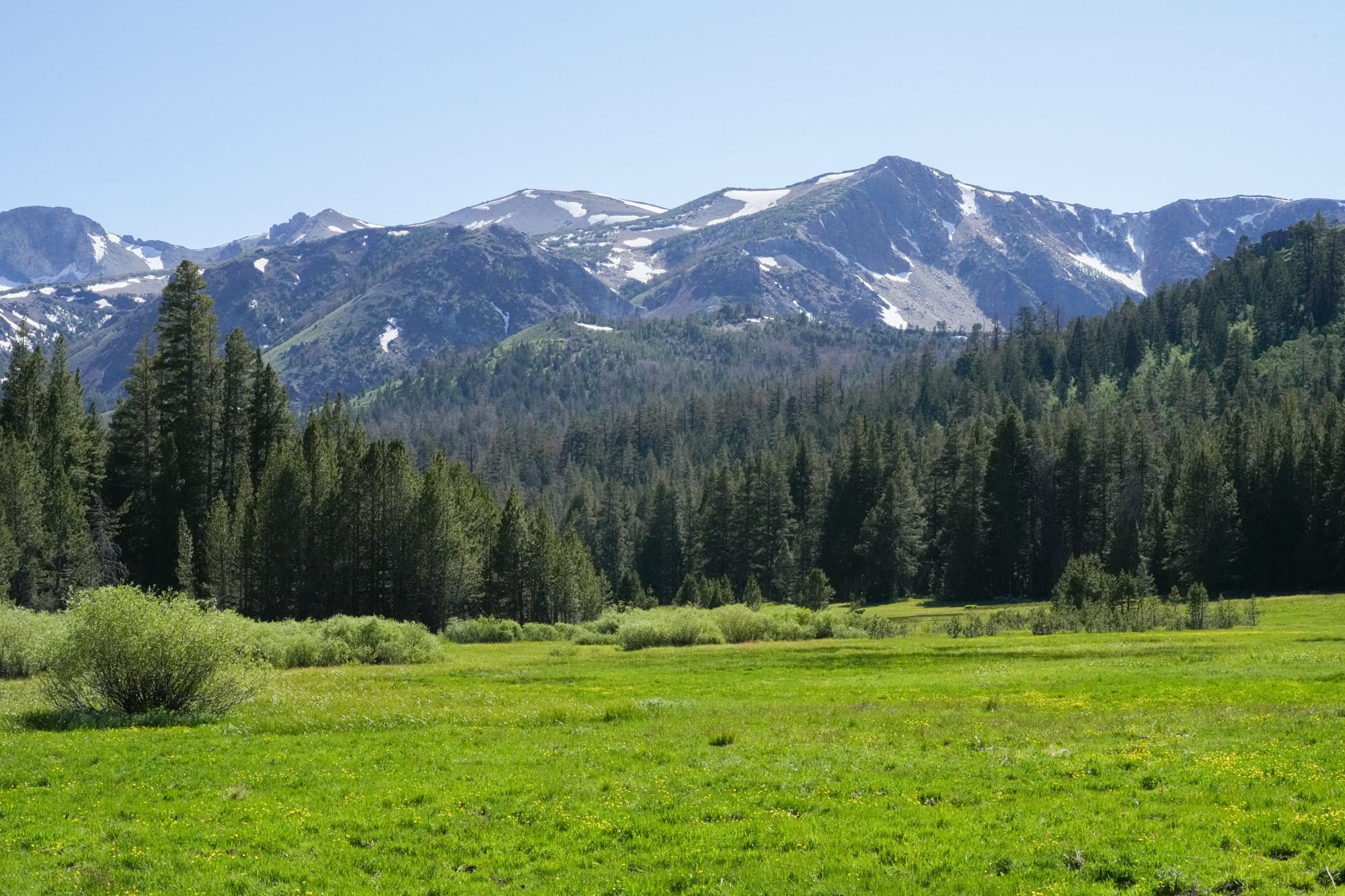
One reason why garter snakes are so successful is that they will devour almost every animal they can overpower, and one of their key ecological roles is eating aquatic animals and transferring nutrients from aquatic to terrestrial food webs.
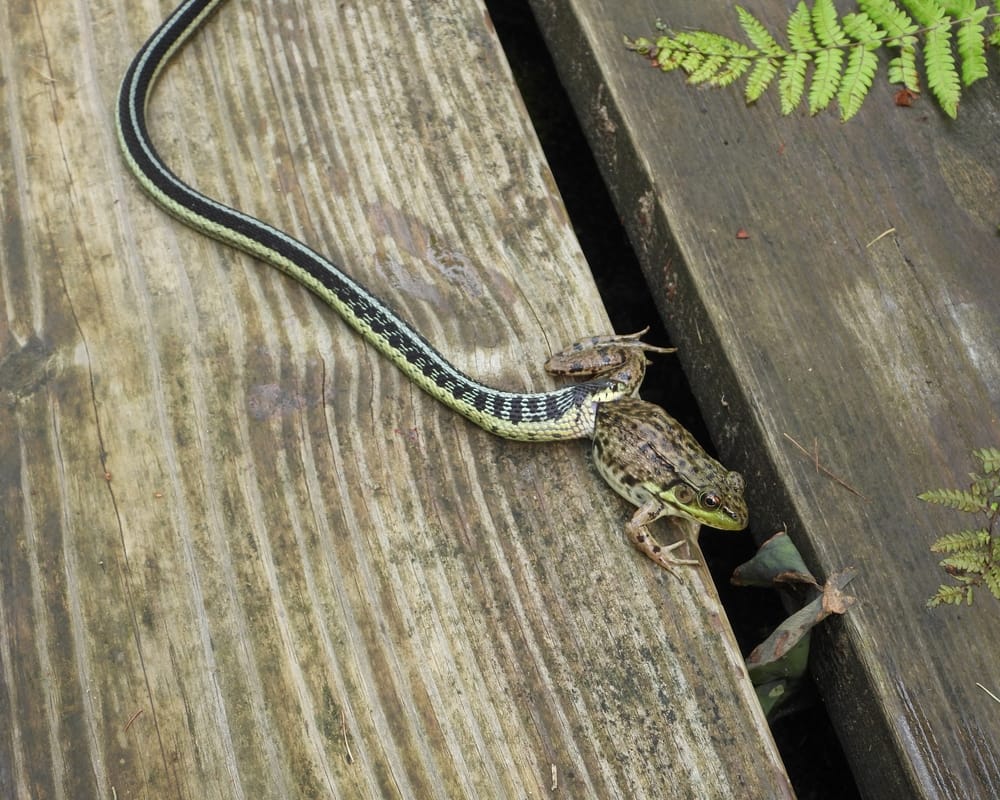
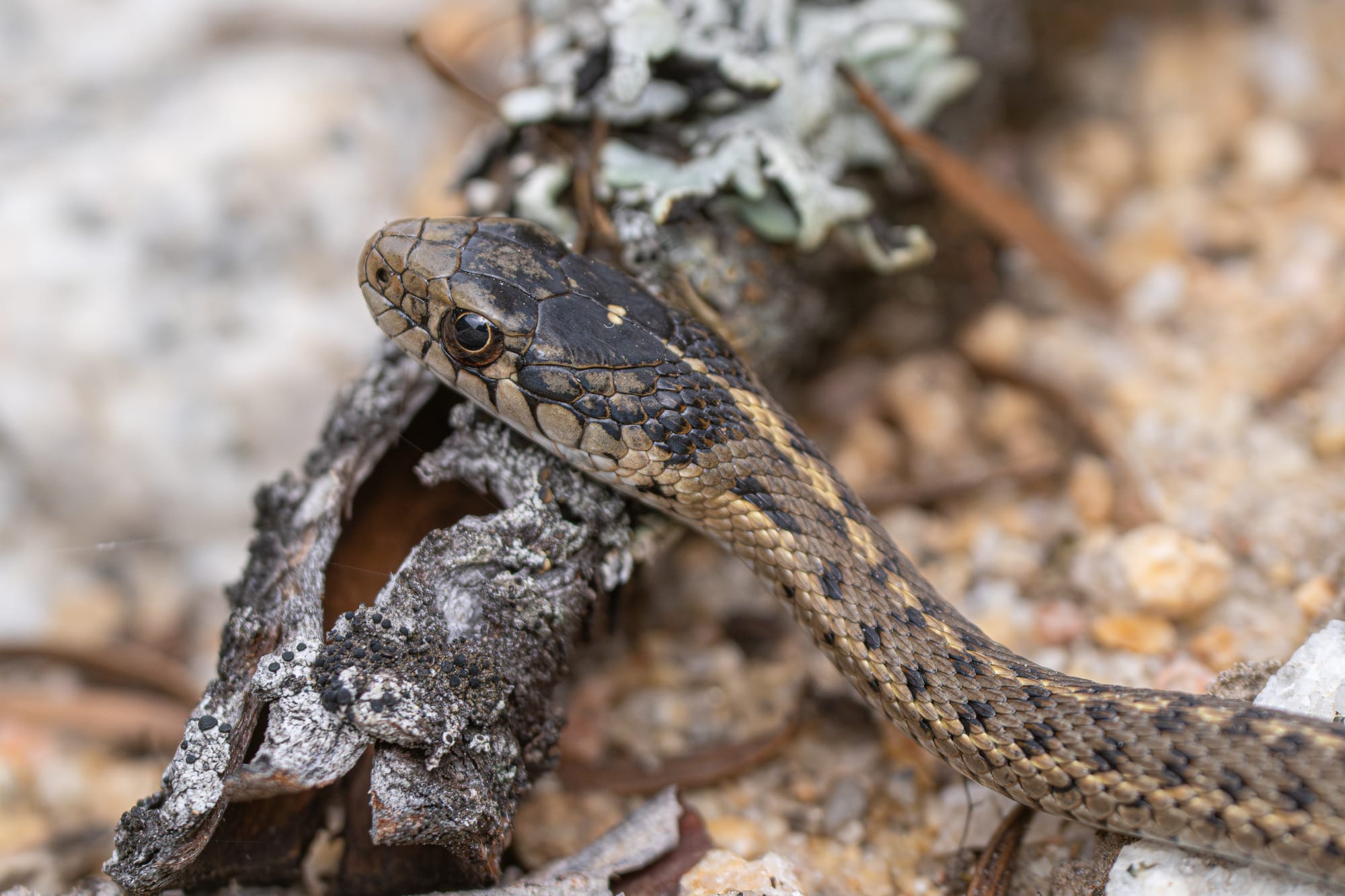
At the same time, their ability to adapt to so many different environments has resulted in the greatest range of color variations and morphs found in any group of snakes. And while some garter snakes have so many different forms that it's hard to believe they're the same species, researchers are especially interested in the common patterns that occur in almost all garter snakes.
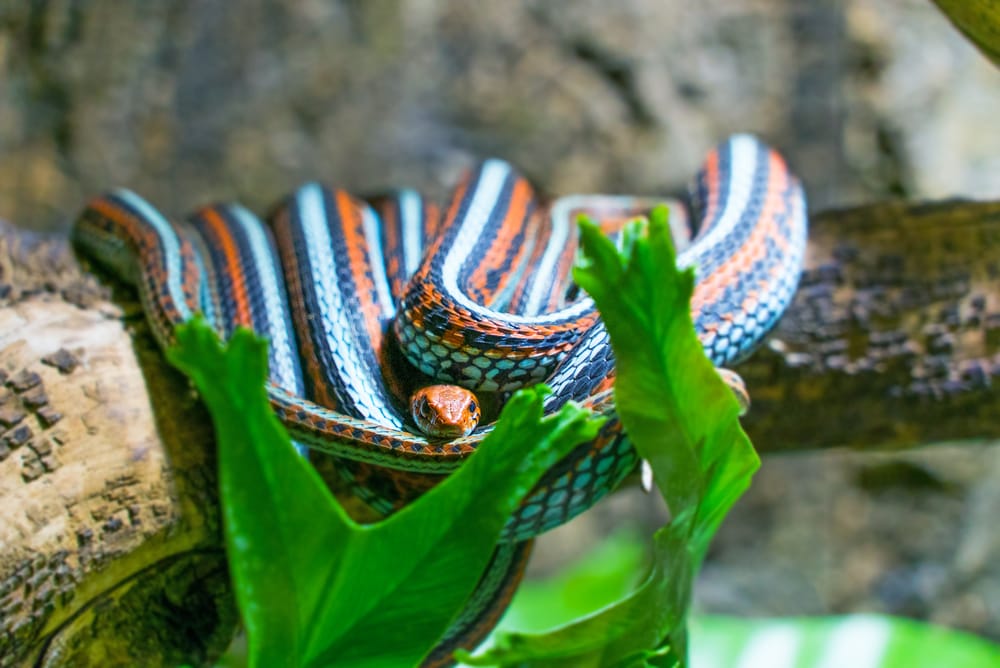
Notably, nearly all garter snakes have either stripes, blotches, or some combination of the two patterns, and what's surprising is that a snake's behavior is based on its pattern.
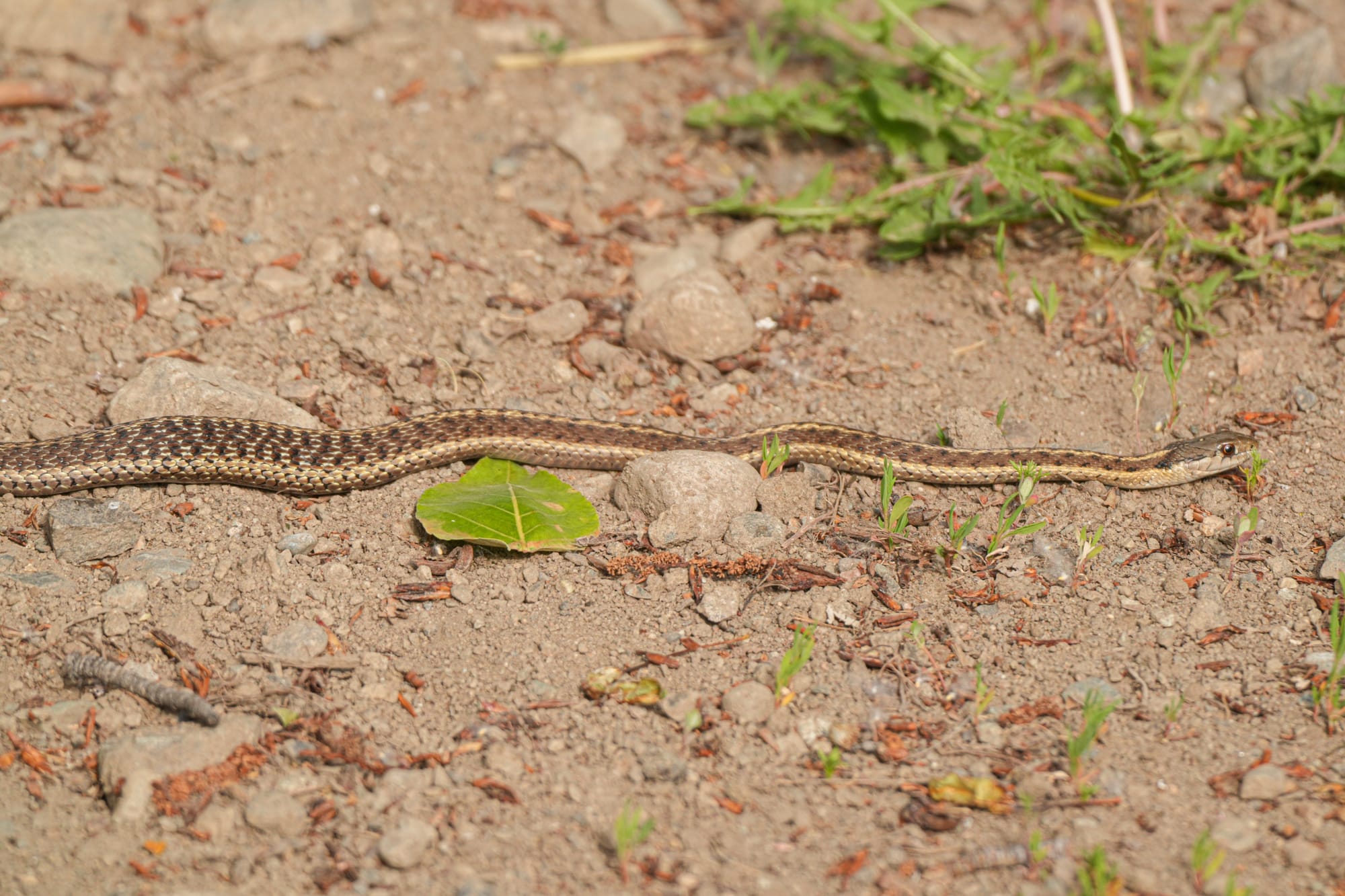
What researchers have learned is that garter snakes with stripes will flee when they detect one of the many predators that love to eat them, while a garter snake with blotches will freeze in place.
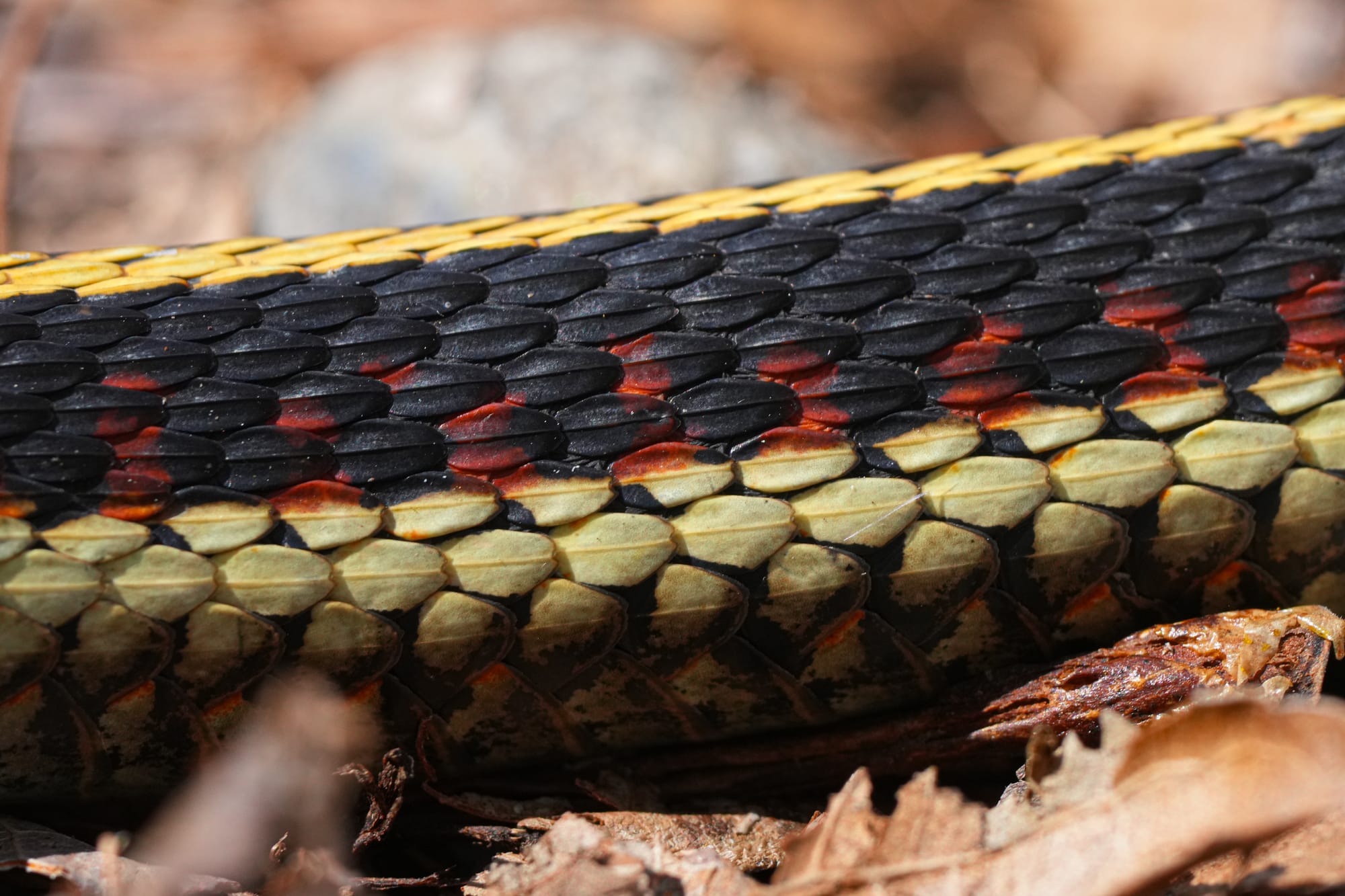
It turns out that stripes help camouflage fleeing snakes because a stripe has no fixed reference point and a confused predator doesn't know where to grab. Conversely, blotches on a snake are easily pinpointed, so a snake with blotches will freeze in place and rely on its cryptic pattern to stay hidden.
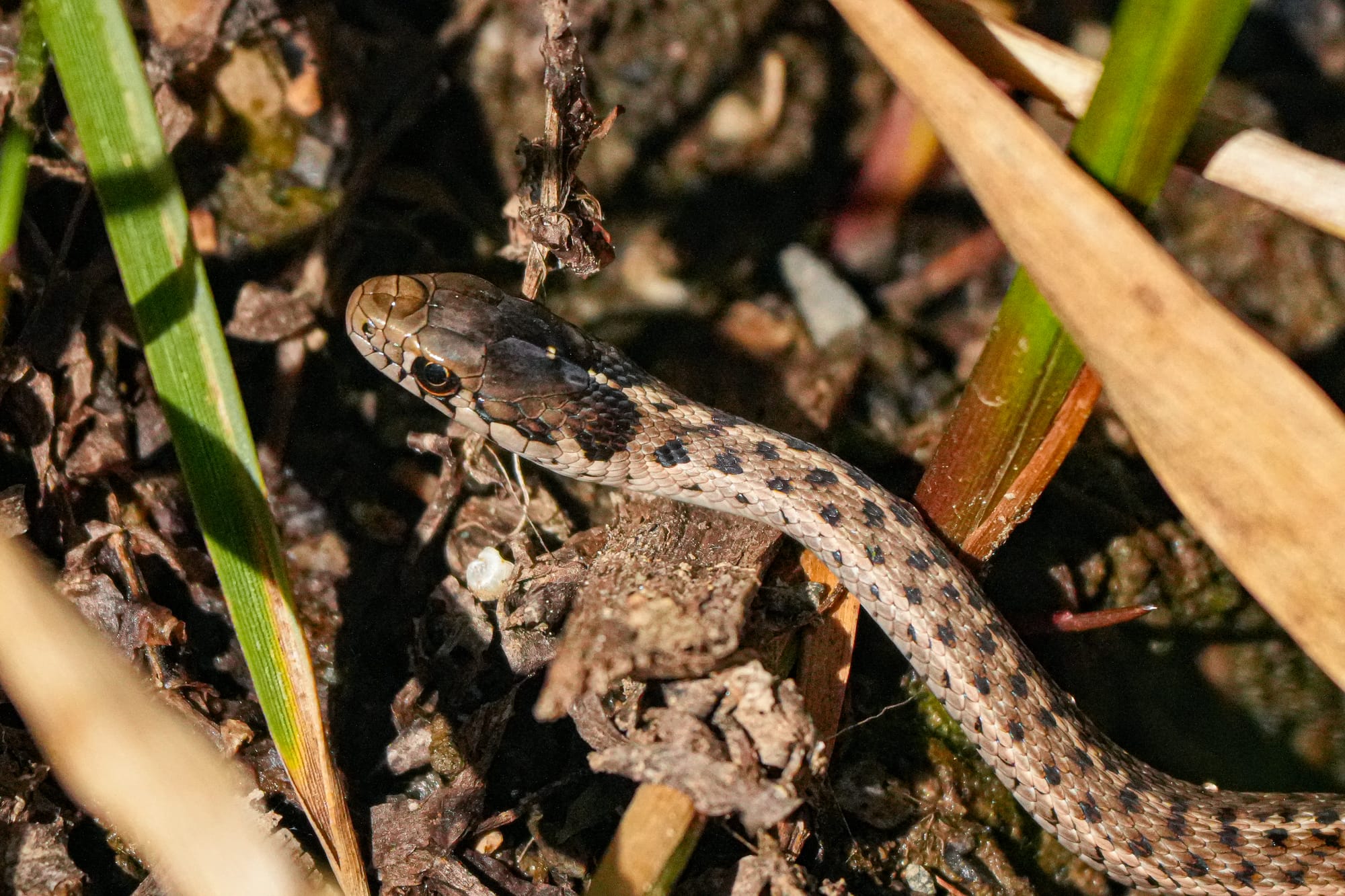
These camouflage tricks are critical for garter snakes because they are eaten by hawks, eagles, owls, crows, raccoons, foxes, weasels, fish, larger snakes, and many other predators, but color patterns alone aren't always enough to protect a garter snake.
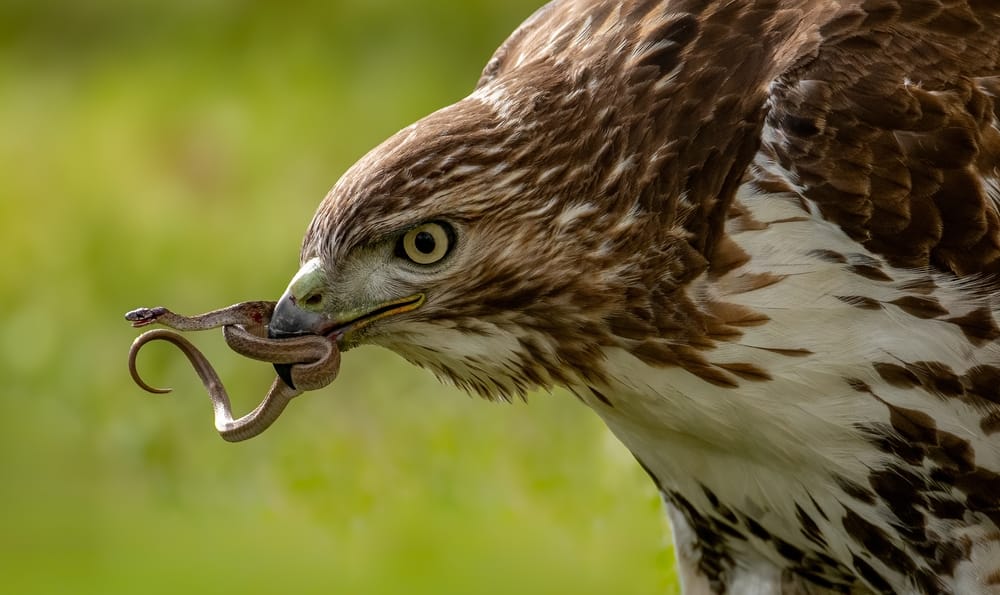
I saw a garter snake two days ago and observed that it was using another defensive strategies. Garter snakes will also sometimes subtly shake or bob their heads from side to side. This behavior is known as reverse crypsis or motion dazzle, and it works by mimicking swaying grass and breaking up the visual outline of the snake so it's harder to see.
If all else fails and the predator (or curious child!) grabs a snake, it resorts to a final line of defense that can be particularly effective: it produces an extremely foul-smelling musk from its anal glands.
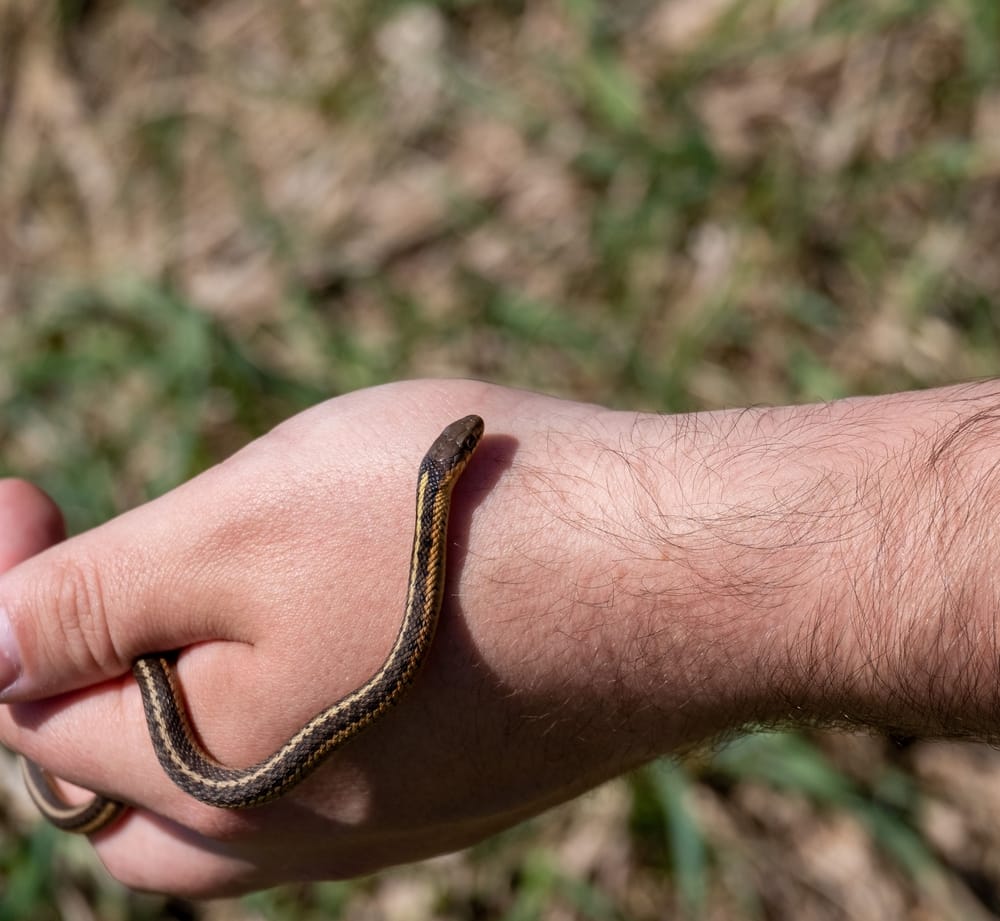
It's a great way of saying "leave me alone." In many cases it seems to work, but I have to admit that I caught so many garter snakes as a kid that this is one of the defining smells of my childhood!

Help Sponsor a Trip?
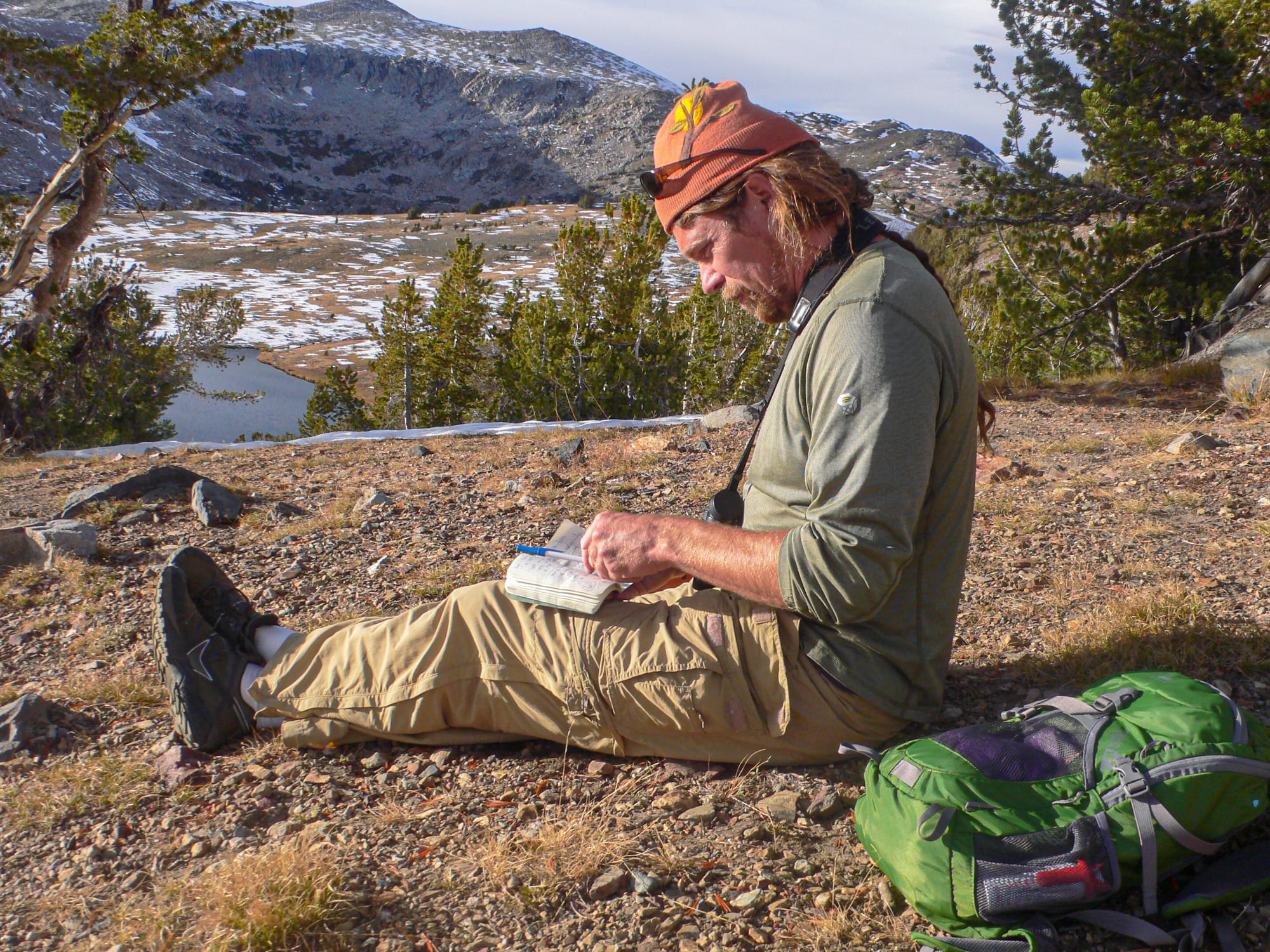
My insatiable and wide-ranging curiosity has me increasingly looking for new places to explore. This is what gets me most excited, and I'd love to find ways to include my readers as partners in this process.
Is there a place in the world you're really excited about, or have always wanted to learn more about? Would you be willing to help sponsor a trip to that place?
Sponsoring a trip could mean anything from helping me pay for a trip, to connecting me with local resources, to sharing your knowledge and insights from your own travels and experiences.
As many of you know, I wrote a Lonely Planet guide to the world's top 200 wildlife spectacles and have contributed "Nature" chapters to over 35 Lonely Planet travel guides for countries all over the world. I'm uniquely qualified to visit and write stories about the world's incredible natural places, and I feel like this is a remarkable opportunity to brainstorm and collaborate one-on-one with readers like you about future topics.
I've been testing this idea out with my recent trips, and it's turning into a great model. For example, my three-week trip to the Sierra Nevada last summer resulted in seven newsletter topics, and my two-week tour of Utah and Idaho last month resulted in three newsletter topics. My journeys to new places and new landscapes will result in even more newsletter topics, and maybe these are the stories you'd love to support and see shared with other readers!
What I'm Reading Now
In response to my recent survey, several people expressed interest in occasional updates on what I'm reading or learning about. As you can guess from the box above, I spend a lot of time reading field guides and natural history books. I will often pick a place in the world, then spend two months reading every guidebook I can find. Last year, I spent two months reading everything I could find on African safaris, including reading every review of lodges, tour companies, and restaurants. Earlier this year, I spent two months studying New Zealand, then two months studying Tasmania, and I just finished reading the massive (850-page!) Lonely Planet guide to Japan alongside a book on the natural history of Japan.
Japan was a complete surprise to me. Out of all the reading and research I've done over the years, I've never glanced at Japan, so I knew nothing about the place. Japan turns out to be more than fascinating, with thousands of islands covering everything from Palearctic boreal species to Oriental subtropical species. Even more interesting, as sea levels have risen and fallen over time, different groups of islands have connected and disconnected from the mainland and from each other, resulting in the most incredible mixing and separation of species. In fact, there are also deep channels that were never breached, creating distinct biogeographic lines with very different species on each side of the lines. On top of that, the landscape is full of ancient nature shrines, temples, and deities, and what is thought to be the world's oldest tree (maybe over 7000 years old). How cool is that?!
Member discussion