The (New) Science of Phytoacoustics
Once relegated to the realm of pseudoscience, the study of hearing in plants seems to have found a new footing.
Nature is full of sound, so it makes sense that having the ability to perceive and respond to sound would be beneficial to all living things. It's obvious that animals have ears and rely on sound, but the topic of whether plants hear and respond to sound has been hotly debated since Darwin tried testing if plants responded to music in the late 1800s.

The study of sound in the plant kingdom (now known as phytoacoustics) saw a more recent resurgence of interest that began in the 1950s and reached a crescendo with the publication of a wildly popular book (and subsequent film) called "The Secret Life of Plants" in 1971.

Unfortunately, the studies and publications from this time period were so sensational and poorly designed that they generated immense scorn, and any scientist wanting to continue these lines of research would have been throwing away their career.

This left the field of phytoacoustics in a state of limbo, and as recently as 2012, one plant biologist wrote that "little credible, conclusive research exists when it comes to a plant's response to sound."
But the tide now seems to be turning so dramatically that in 2024, a team of researchers wrote, "At present, phytoacoustics is one of the most exciting and growing fields in plant sensory biology, with many things awaiting discovery."
I don't want to get ahead of myself because there are still many unanswered questions and confusion around how to interpret the data, but a raft of new studies and incredibly sophisticated tools are taking these topics deeper than anyone could have ever imagined.
It's becoming increasingly clear that plants perceive and respond to sounds. For example, several plants are now known to use their flowers like satellite dishes to amplify and reflect the echolocation signals of bats at the precise moment the plants need bats to visit and pollinate their flowers. Some studies have shown that roots grow towards the sound of running water, while other studies have shown that the sound of caterpillars chewing on leaves prompts plants to produce chemicals that stunt the growth of the caterpillars. And my favorite study demonstrated that evening primroses add extra sugar to their nectar within three minutes of hearing the sound of a honeybee.

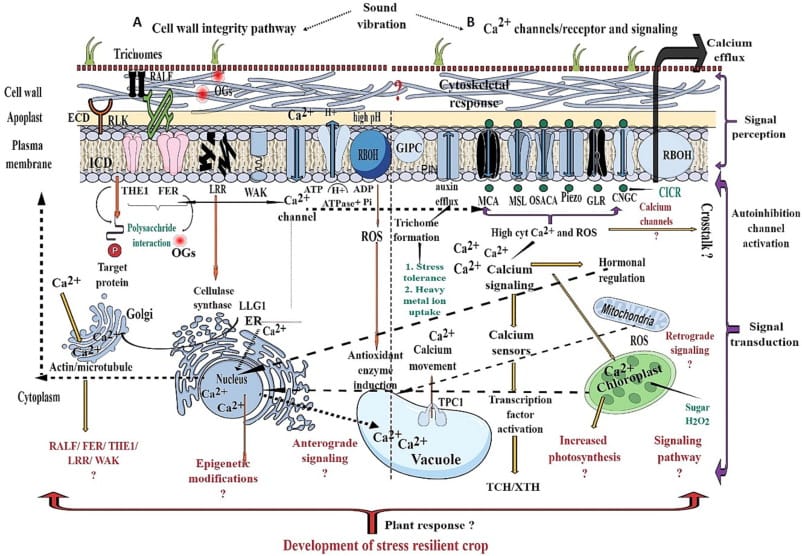
What's less clear, and far more controversial, are the mechanics of how plants could "hear" sound in the absence of ears. One possibility is that fine hairs (trichomes) on plants act as tiny antennae, much like many animals rely on hairs in their ear canals to hear sounds. Another explanation is that plant cell walls turn sound vibrations into biochemical signals that trigger a complex cascade of changes in gene expression, enzyme production, and the functioning of intracellular organelles.
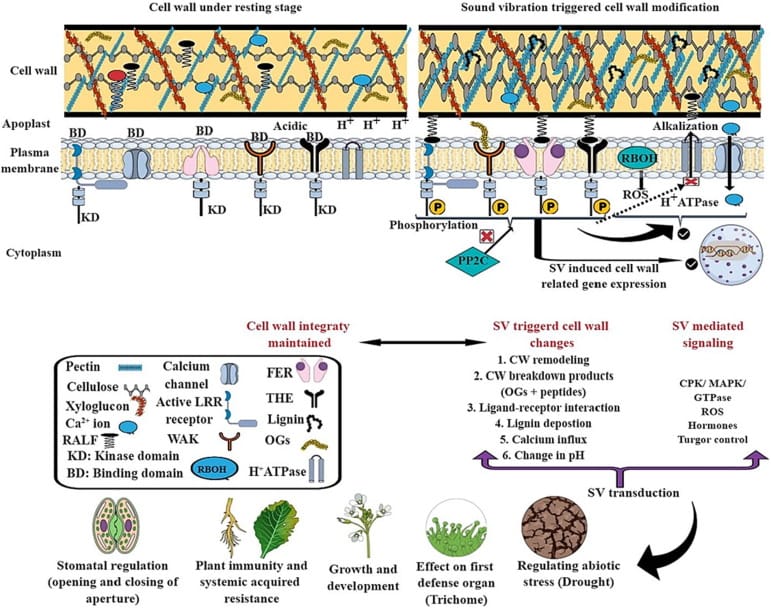
Even more interesting are questions around whether plants communicate "wirelessly" with each other, or with the bacteria, microbes, insects, and countless other organisms who have spent millions of years evolving deep relationships with plants. For example, plants make audible clicking sounds in the presence of stress, drought, and viral infections. These sounds could be easily heard by mice and insects, and perhaps other plants, though it's unknown whether these sounds carry any meaning.

Let's just say that the jury is still out on whether (or how) plants might hear sounds. Many fascinating studies have been published in recent years, but old thinking dies hard and there are still plenty of scientists who dismiss the idea that plants hear sounds. What do you think?
Further reading:
If you're interested in digging deeper it's easy to research this topic with a Google (or Google Scholar) search, but here are a few of the better resources I found.
Some of you may have already run across this topic from reading Zoë Schlanger's recent book, The Light Eaters. Her chapter on plant hearing is a straightforward introduction, or you could find many of the same highlights in this short paper, Phytoacoustics - Plants can perceive ambient sound and respond.
The term phytoacoustics is first presented and the field of study previewed in this excellent paper, Sound perception in plants.
This long and technical paper explores the mechanics of how plants might hear sounds, Understanding the mechanobiology of phytoacoustics through molecular Lens: Mechanisms and future perspectives.
Enjoy!

Member discussion