A Light Goose Story
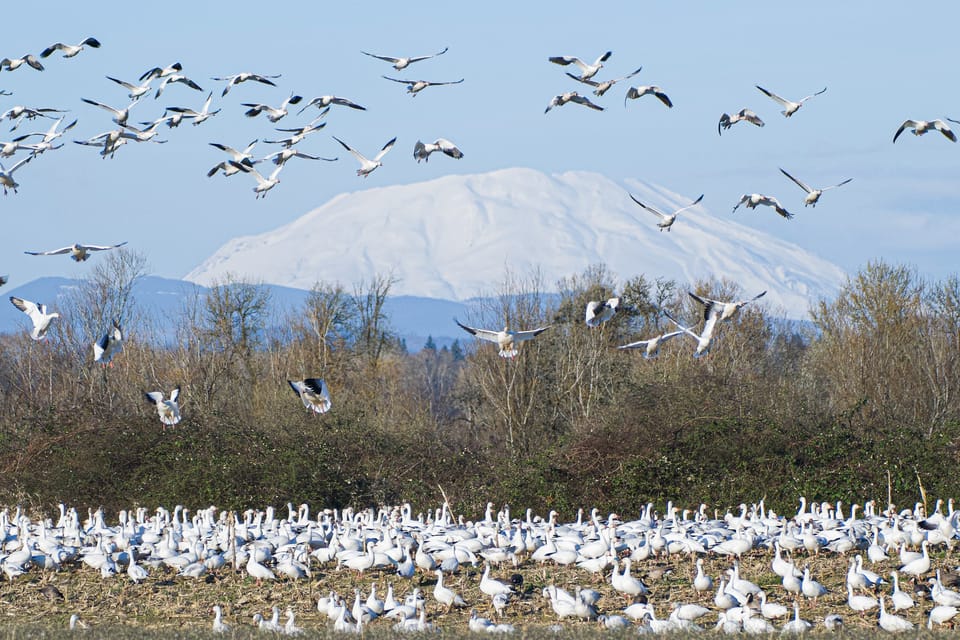
As they lift like clouds of swirling angels, snow geese herald the changing seasons with their deafening cries.
There's no getting around the fact that snow geese are awe-inspiring birds, and right now they are on the move in a big way. This is their spring migration, and snow geese are traveling across North America in immense flocks with a restless, vocal energy that will make your jaw drop.
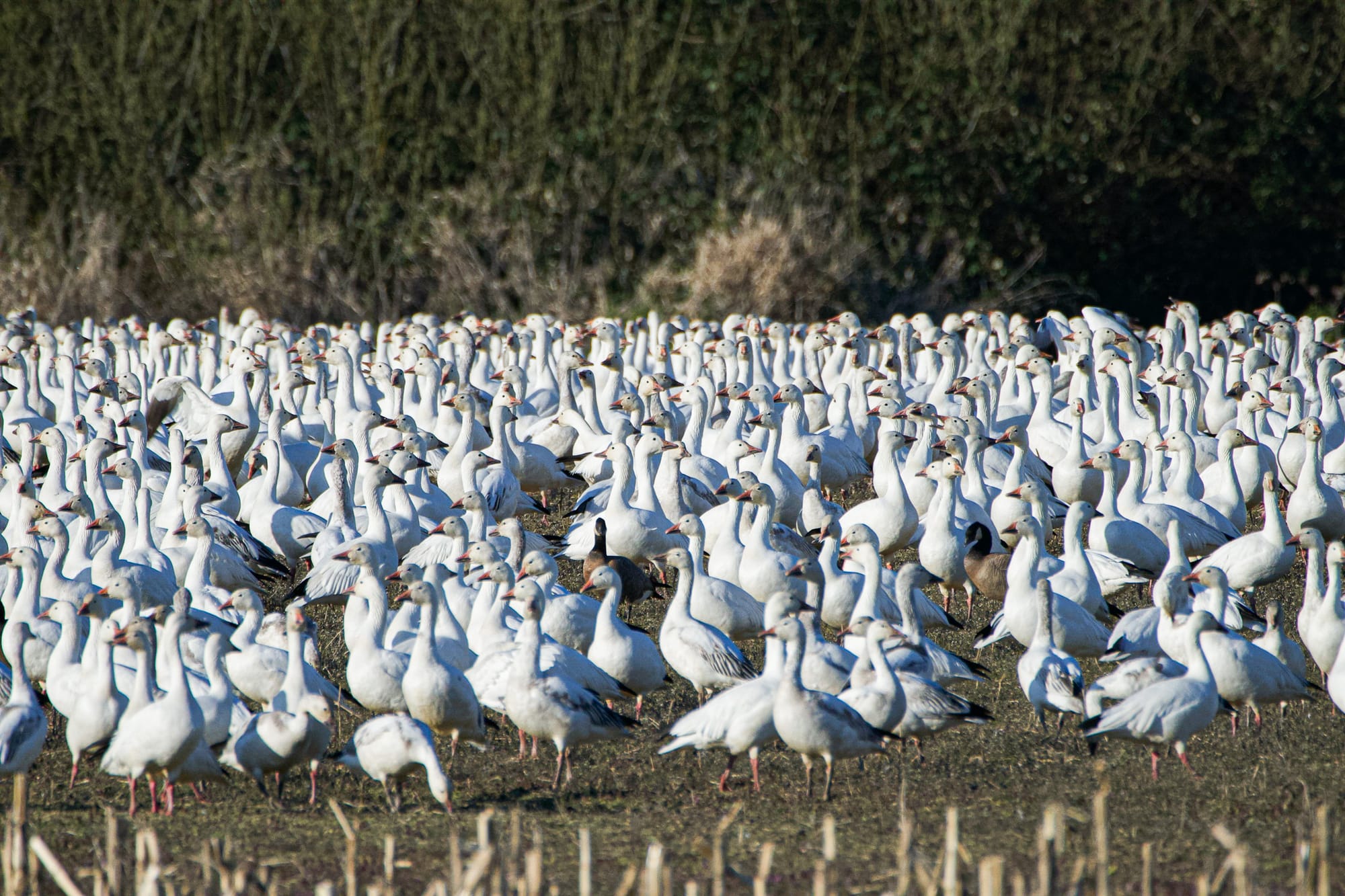
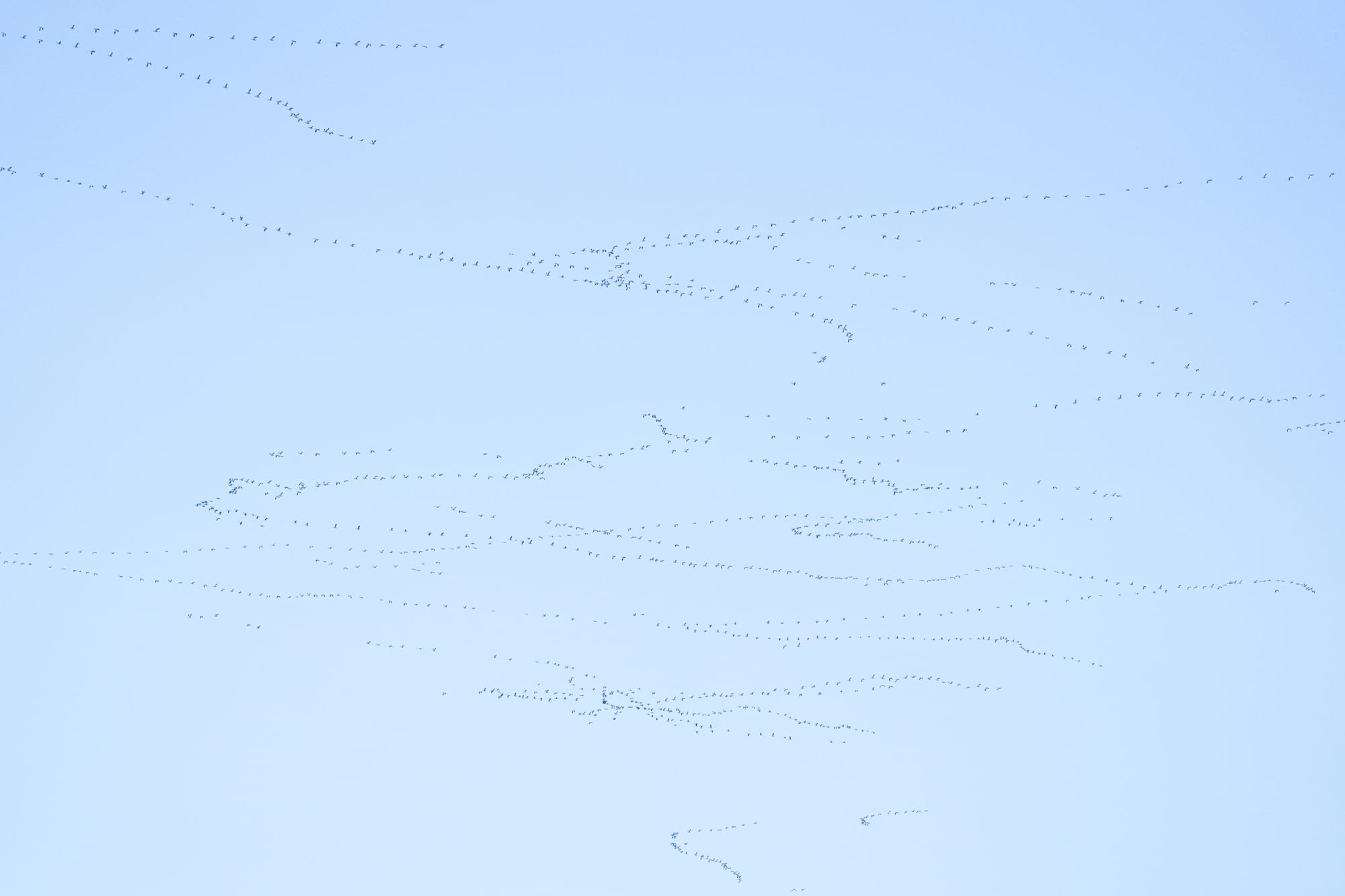
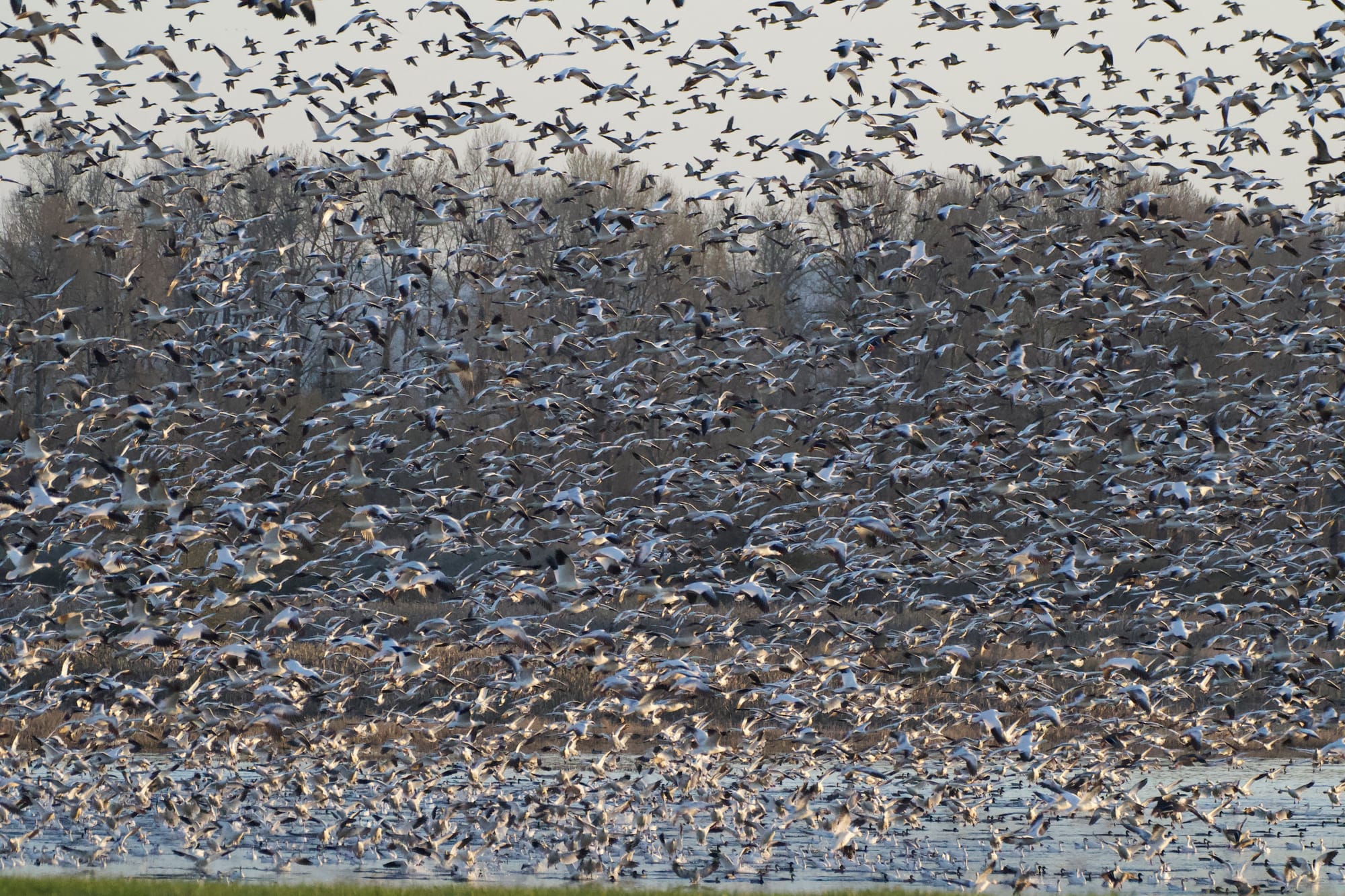
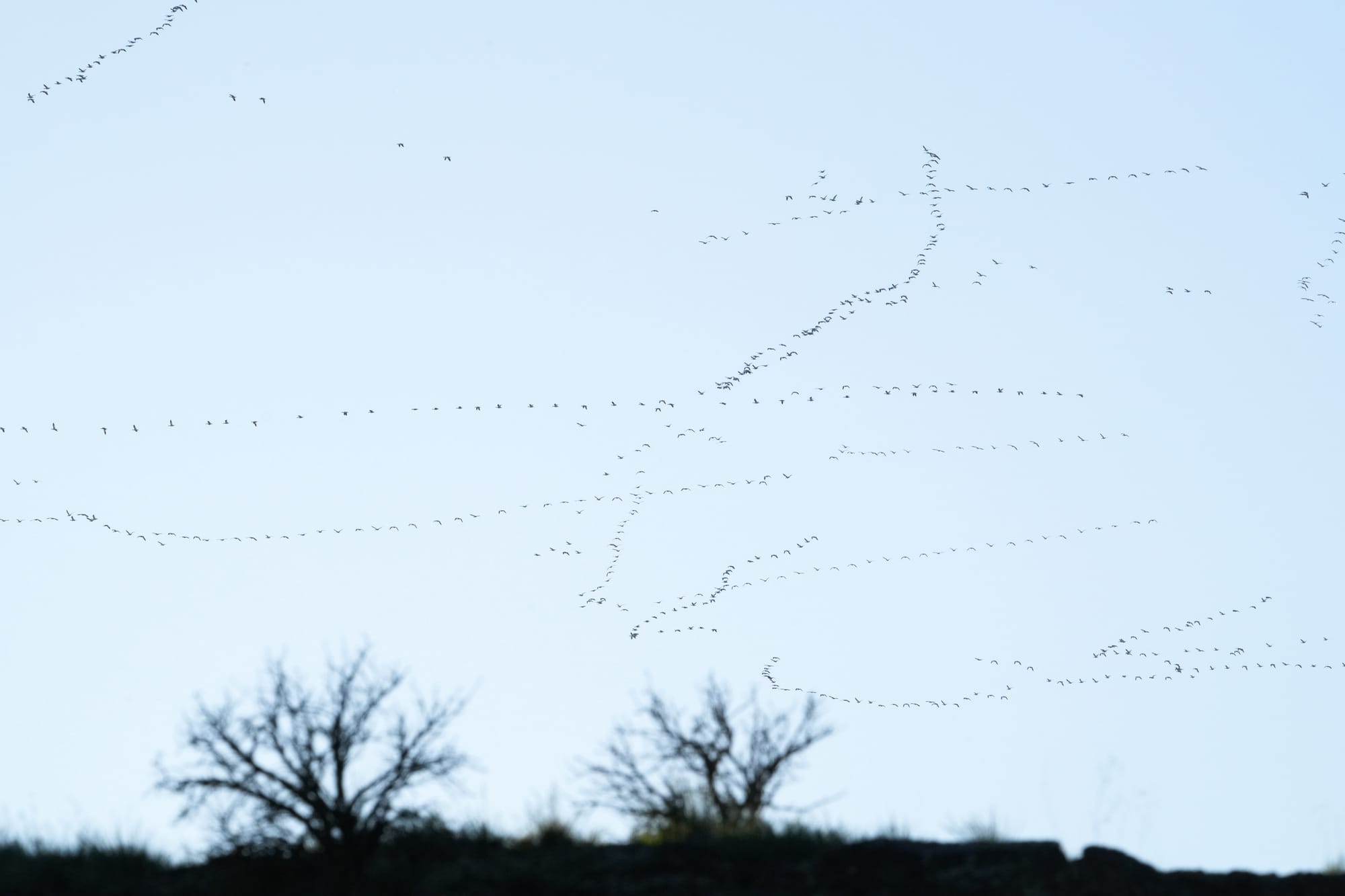
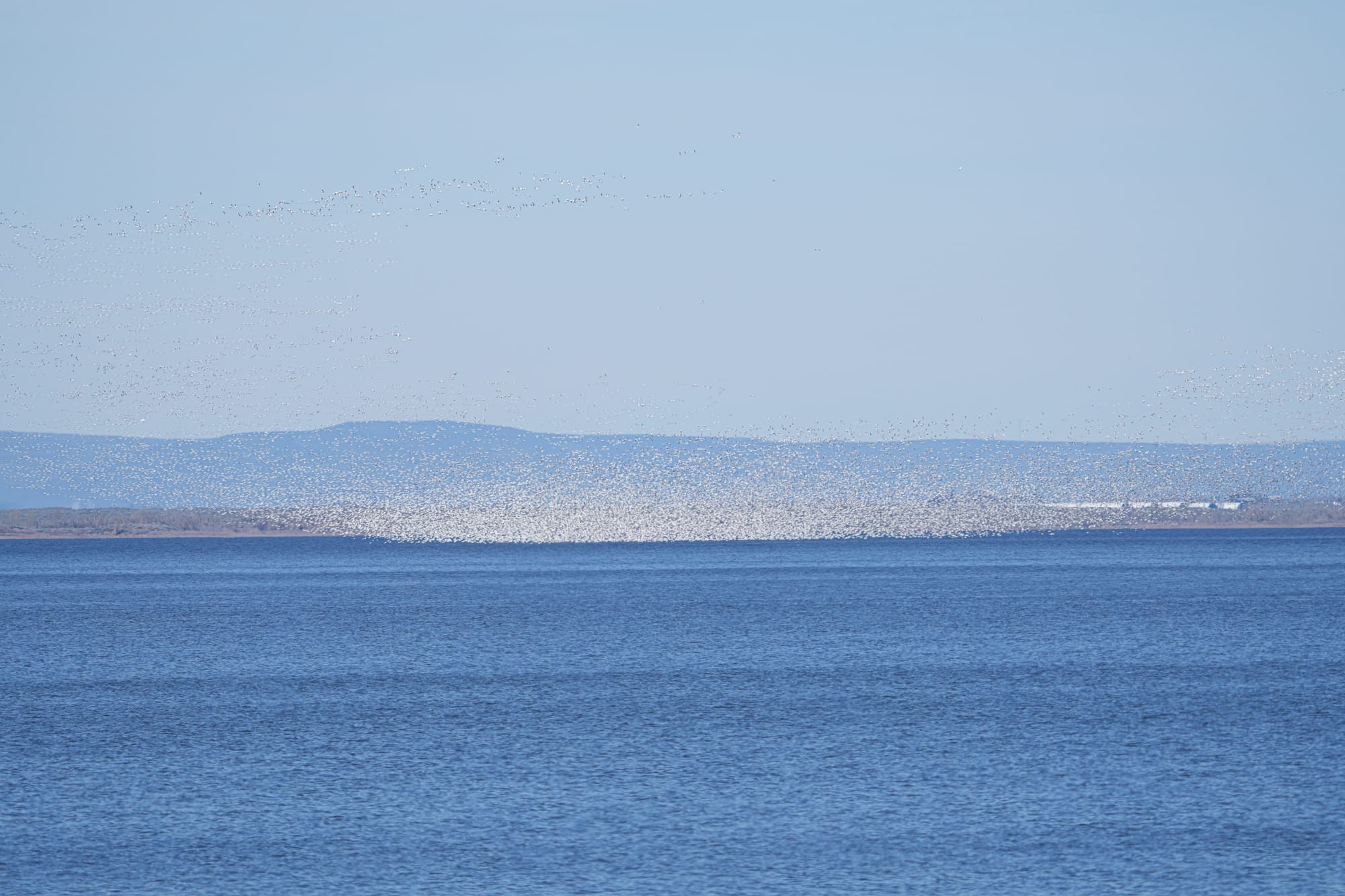
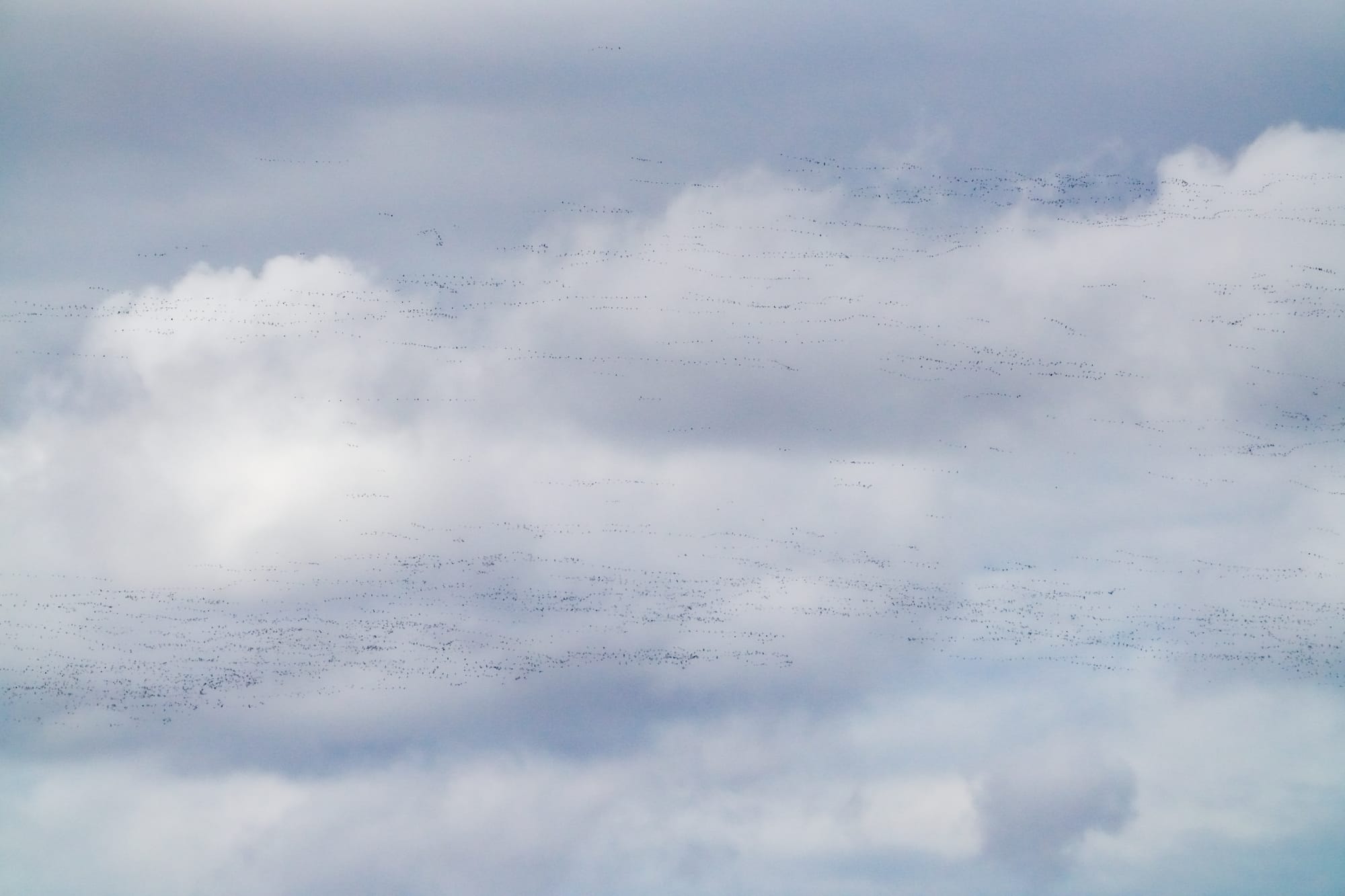
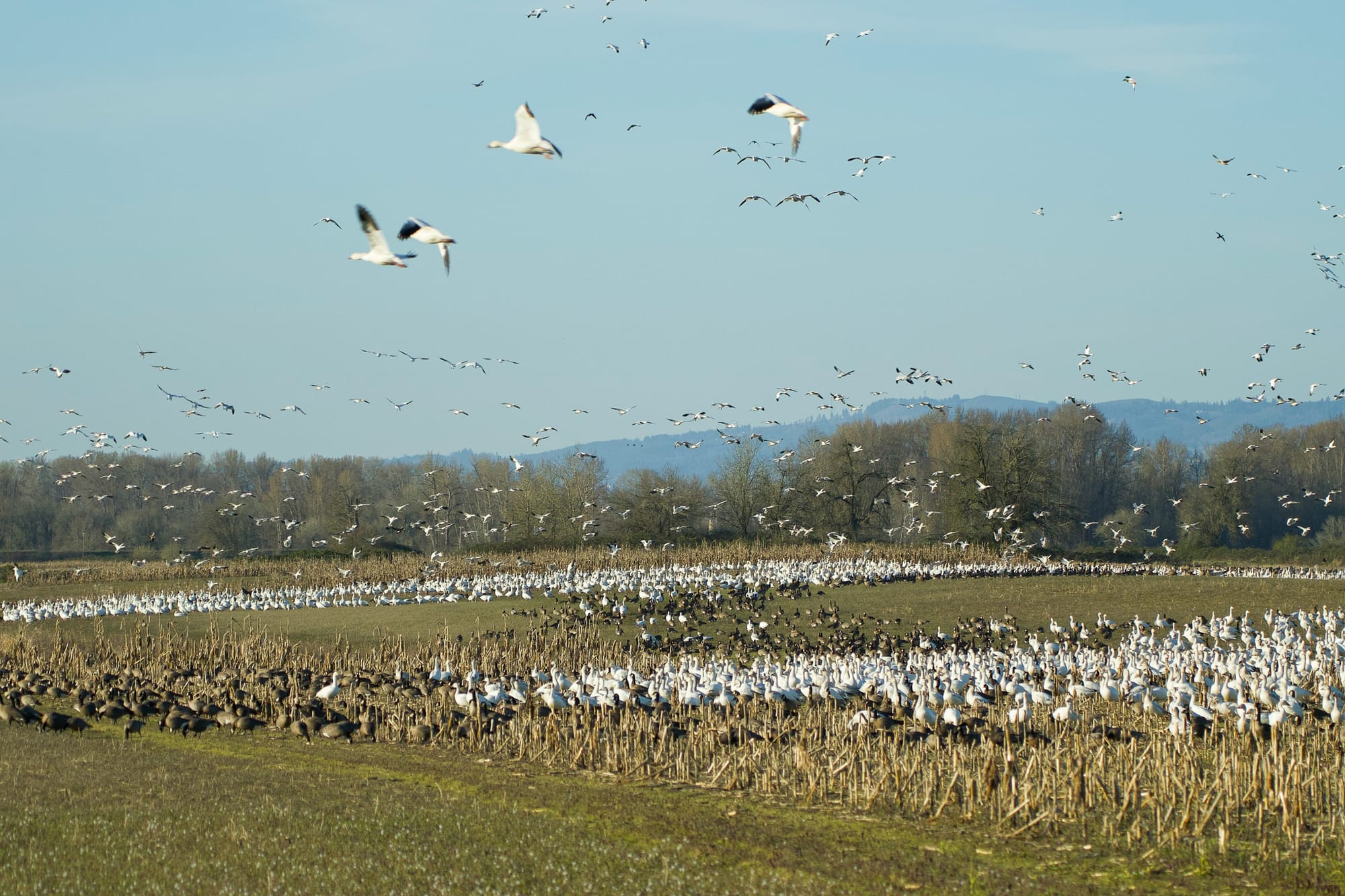
I had a chance to experience this at the Othello Crane Festival last weekend, where I witnessed hundreds of thousands of snow geese gathering in the big, open spaces of eastern Washington. There were times when continuous lines of flying geese stretched from horizon to horizon for what felt like hours, and there were times when so many geese settled in fields or on lakes that they looked like shimmering white carpets.
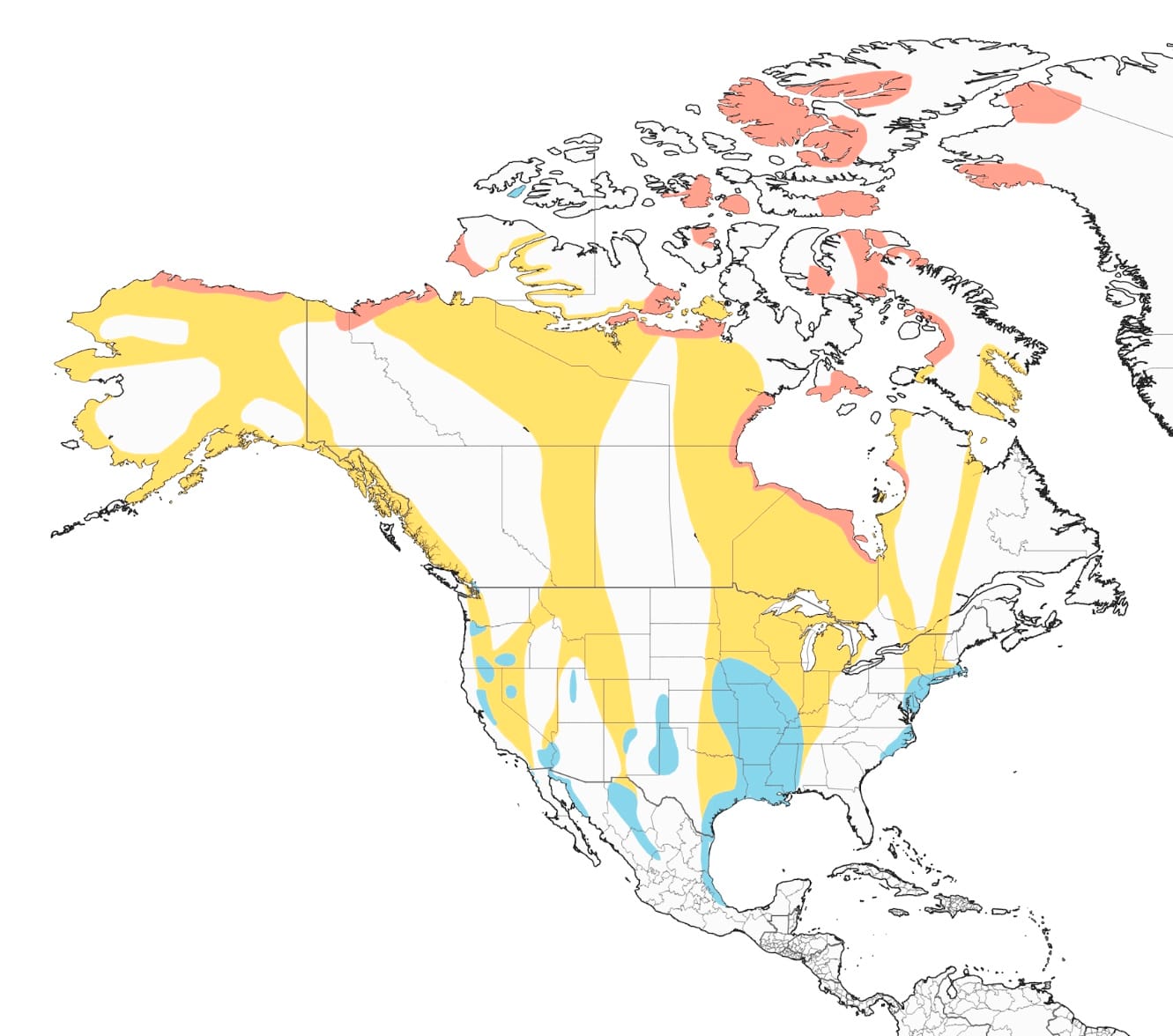
Snow geese are thought to be the most abundant goose in the world, and one of the things that makes them so interesting is that they have distinct populations that breed in specific areas of the Arctic, winter in separate regions in the United States, and follow well-defined paths as they migrate.
Every aspect of this seasonal cycle is well-documented and snow geese are said to be the most-studied birds in North America. This is because they are extremely popular with hunters and part of why so many National Wildlife Refuges and other protected areas have been set aside.
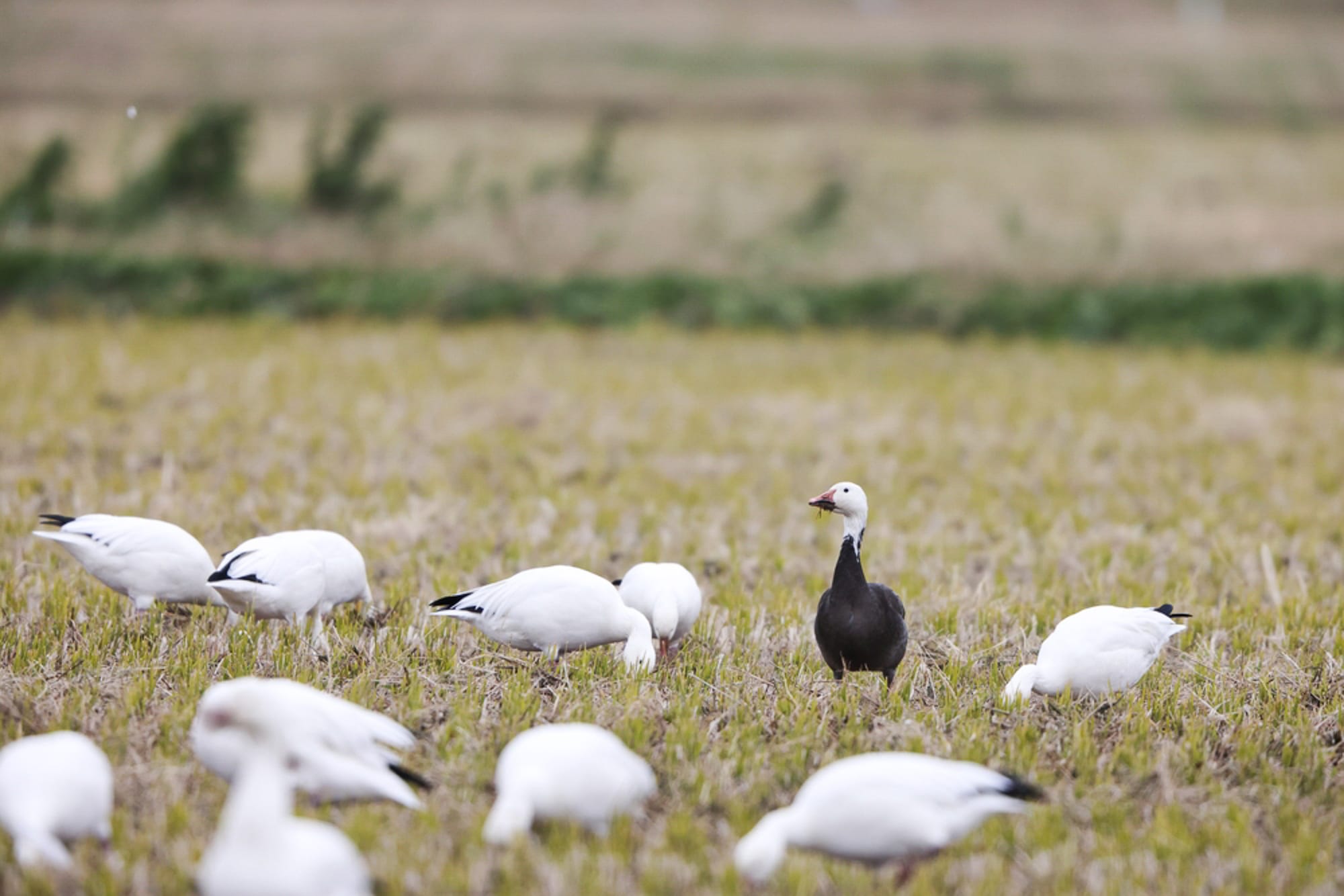
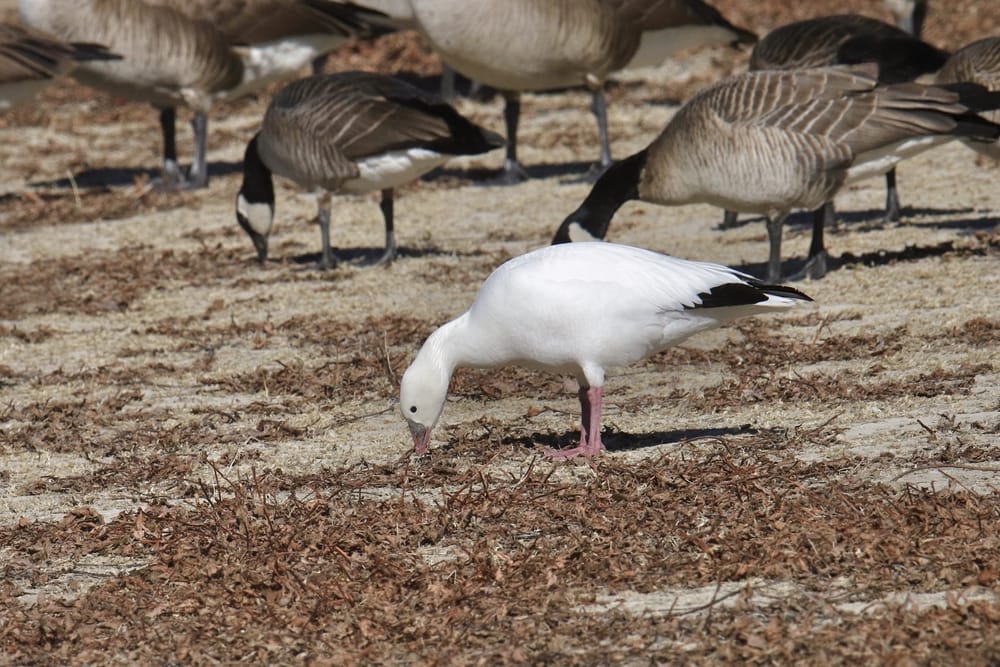
If you're a birdwatcher who is focused on identifying individual birds, you can (with practice!) separate snow geese from nearly identical Ross's geese or pick out the differences between white and blue morph snow geese. But if you're tasked with monitoring populations of hundreds of thousands of geese at a time, it would be impossible to quantify these differences, so game managers and biologists use the colloquial term "light geese" (based on the light colors of these geese) and lump them all together.
For time immemorial, light geese largely spent their winters in coastal areas, where they dug up the tubers and rhizomes of salt and freshwater marsh plants. Over the 20th century, however, the rapid conversion of forests and shrublands to agricultural fields opened up vast swathes of new feeding areas away from the coast, and populations of these geese exploded.
Their numbers increased so dramatically (reaching upwards of 20 million birds by 2007) that they began overwhelming and degrading fragile habitats on their ancestral breeding grounds. Game managers responded by greatly expanding hunting opportunities, but even hunters couldn't make a dent in these massive numbers.
Frankly, this is the kind of story that really bothers me: As soon as an animal starts reaching the kind of abundance that was a daily occurrence when Europeans arrived in North America, it's immediately labeled as an "issue" that needs to be managed, rather than an event to be celebrated.
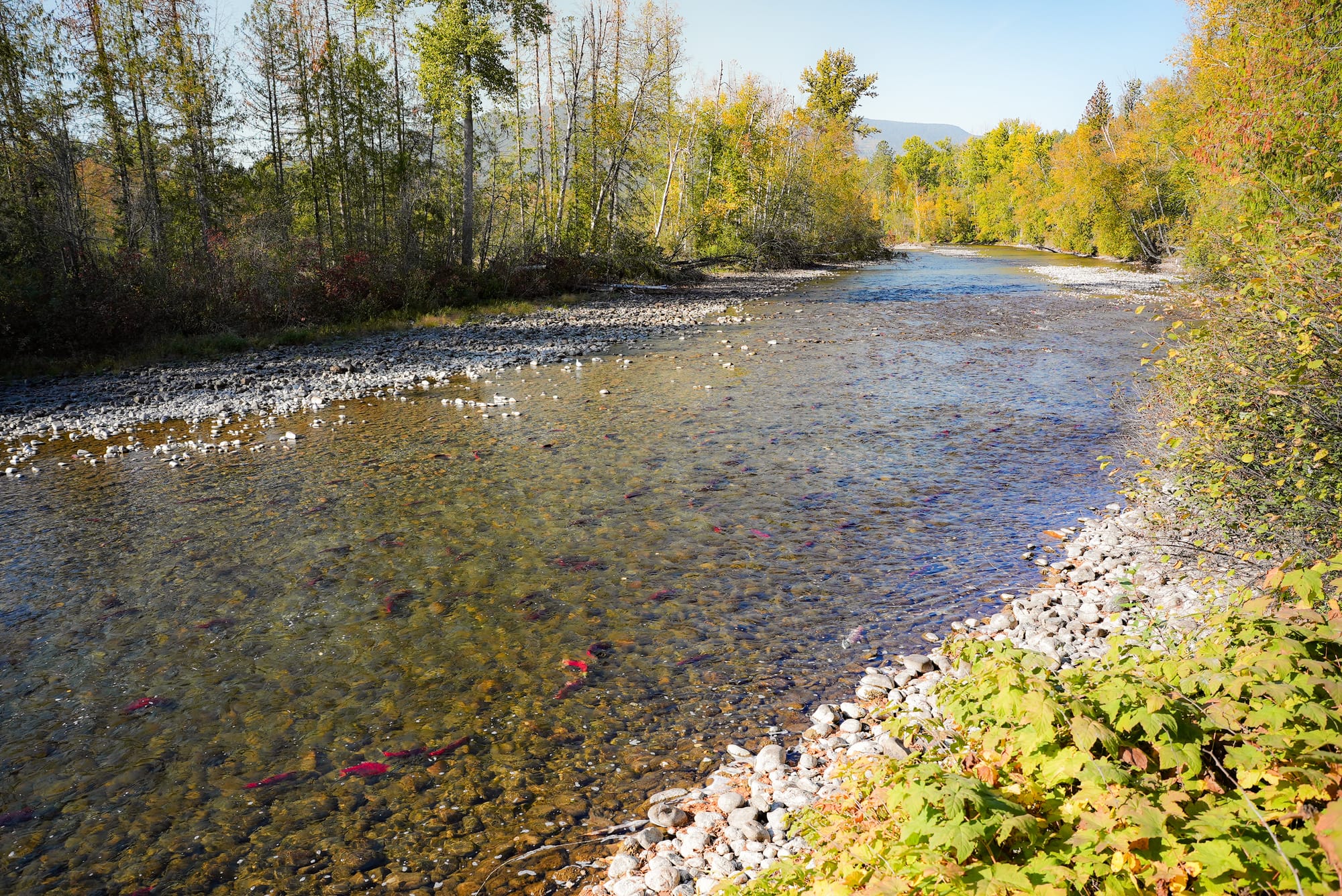
People overlook the fact that large populations of animals play significant ecological roles that can't be replicated by smaller populations. Specifically, large populations of animals have an impact because they transport critical amounts of nutrients between ecosystems as they migrate. For example, there's the classic case of how the massive, old-growth forests of the Pacific Northwest were fueled by the annual pulse of ocean nutrients delivered by salmon that once migrated upstream in incalculable numbers.
There's also the immeasurable impact on the human spirit that comes from experiencing the magnificence of animal abundance. We've largely lost this experience, and with it an understanding of what's possible. [This concept is known as shifting baselines, and I wrote about it in a previous newsletter.]
However, in the case of snow geese, something unexpectedly shifted. Since 2007, their numbers have dropped by an estimated 15 million birds and are continuing to decline at a dangerous rate. It's thought that some combination of avian flu and global warming is causing this decline, with multi-day rain events during the nesting season leading to catastrophic losses of vulnerable goslings.
Ultimately, the magic of animals like snow geese is the way their populations ebb and flow on such grand scales. There's a certain kind of power in this dynamic, and if you've never felt that energy, you need to hear the sound that tens of thousands of geese make when they all take off at once!
Here's a very short clip I made to highlight the energy of snow geese on migration.

Member discussion